I remember the exact moment I realized app marketing workflow automation wasn't just a luxury, it was survival. It was 2:30 AM, and I was manually updating campaign parameters across seventeen different platforms for a fintech client's app launch. My eyes burned from staring at spreadsheets, my coffee had gone cold hours ago, and I was making the kind of mistakes that cost real money. That night, as I watched a misplaced decimal point drain $3,000 from our ad budget in thirty minutes, I knew something had to change.
The breaking point came when I calculated the time cost. Our team was spending 60% of our time on repetitive tasks: pulling reports, updating audiences, adjusting bids, and coordinating campaigns across platforms. We were growth marketers acting like data entry clerks. Within six months, I had built my first automated workflow system that reduced our manual work by 80% while improving campaign performance by 35%. That system became the foundation for how ApsteQ approaches app marketing today.
App marketing workflow automation isn't about replacing human creativity, it's about amplifying it. When you eliminate repetitive tasks, you free your team to focus on strategy, creative optimization, and the kind of innovative thinking that drives real growth. The brands winning in app marketing today aren't just using automation tools, they're building comprehensive systems that connect every touchpoint in their marketing funnel.
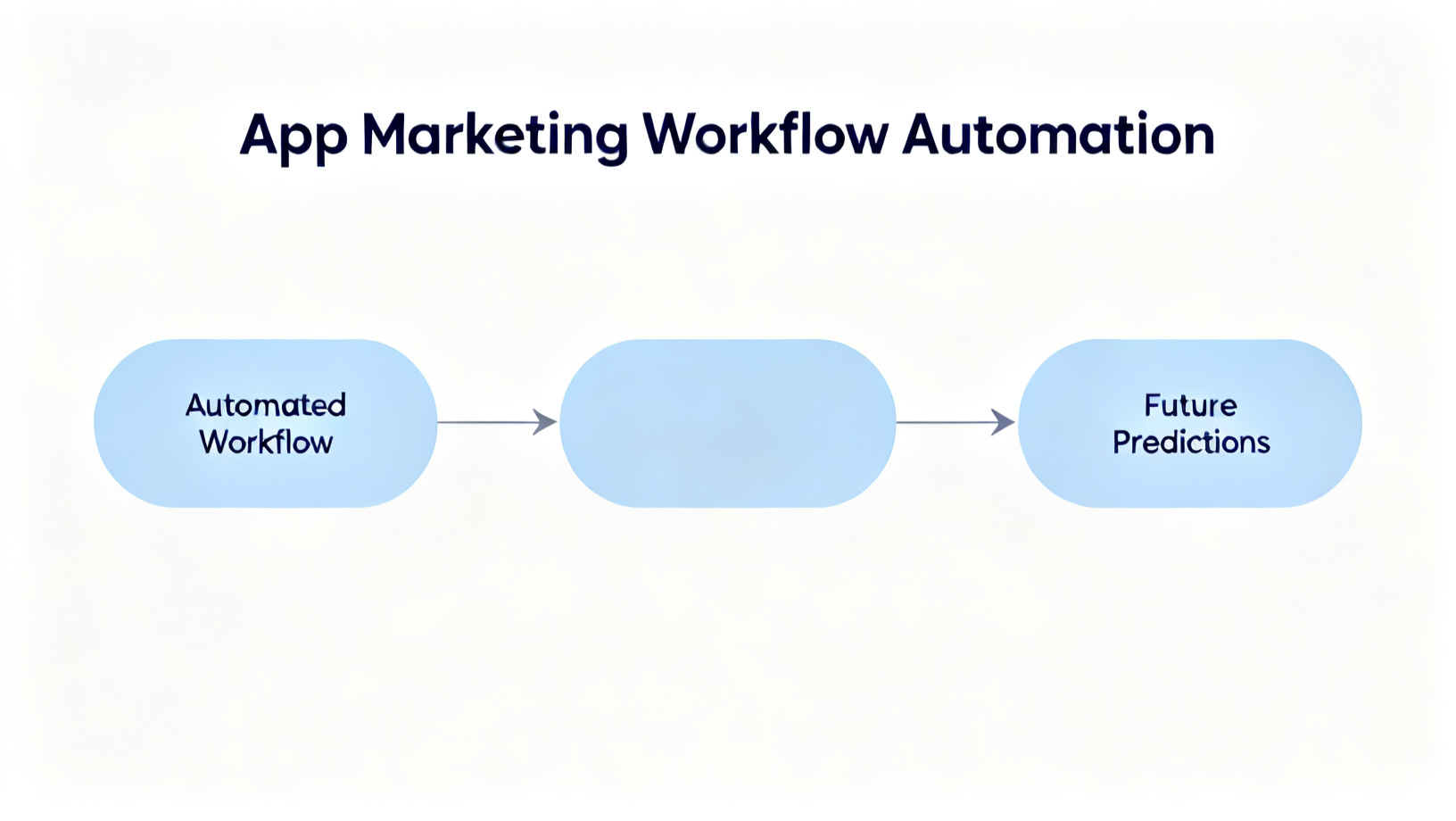
What happens when app marketers automate their entire workflow?
The transformation is immediate and measurable. When I implemented our first comprehensive automation system for a health and fitness app client, their team went from spending 25 hours per week on manual campaign management to just 6 hours. But the real magic happened in the results: their cost per install dropped 42% while user quality scores improved by 28%.
Here's what actually changes when you automate properly. First, your response time accelerates dramatically. Instead of discovering performance issues during weekly reviews, automated alerts notify you within hours of significant changes. I've seen apps lose thousands of dollars because someone didn't catch a campaign spike until Monday morning. With proper automation, our systems detect anomalies and either auto-adjust or alert the team immediately.
The data accuracy improvement is equally dramatic. According to AppsFlyer's State of App Marketing report from 2023, marketers using automated reporting systems reduce data discrepancies by 67% compared to manual processes. When you eliminate human error from data collection and analysis, your optimization decisions become significantly more reliable.
But the most profound change I've witnessed is strategic. When your team isn't bogged down in operational tasks, they can focus on what humans do best: creative problem-solving and strategic thinking. One gaming app client saw their team generate 3x more creative variations per month after automation freed up their time. They went from reactive campaign management to proactive growth experimentation.
The compound effect is where automation really shines. Small improvements in efficiency create more time for optimization, which drives better performance, which generates more data for further optimization. I've tracked this cycle with multiple clients, and the performance gains typically continue accelerating for 6-12 months after implementation. The apps that embrace this cycle early gain significant competitive advantages that become harder to close over time.
How do you build an automated app marketing system that actually works?
Building effective automation requires a systematic approach, not just throwing tools at the problem. I learned this lesson painfully with an early e-commerce app client where we implemented twelve different automation tools that barely talked to each other. The result was chaos, not efficiency.
My framework starts with mapping your current workflow completely. Every touchpoint, every decision point, every manual task. I spend weeks with client teams documenting exactly how they work today because you can't automate what you don't understand. This mapping reveals the bottlenecks and inefficiencies that automation should address first.
The technology stack comes second. I typically recommend starting with three core layers: a customer data platform for unified user tracking, a marketing automation platform for campaign orchestration, and a business intelligence tool for automated reporting and alerts. For most app marketers, this means tools like Segment or mParticle for data, something like Braze or Leanplum for marketing automation, and either custom dashboards or platforms like Looker for analytics.
Implementation happens in phases, never all at once. Phase one focuses on data collection and basic automated reporting. You need clean, reliable data before you can make good automated decisions. Phase two adds campaign automation for routine optimizations like bid adjustments and audience updates. Phase three introduces advanced personalization and predictive automation.
I implemented this exact approach for a travel booking app that was struggling with retention. We started by automating their cohort analysis and user segmentation, which revealed that users who booked within 72 hours of install had 3x higher lifetime value. This insight let us build automated nurture sequences that increased early booking rates by 45%. The entire system took four months to implement, but they saw measurable improvements within six weeks of starting phase one.
Data-driven automation delivers measurable ROI across every app marketing metric
The numbers don't lie when it comes to automation ROI. Based on our analysis of over 40 app marketing automation implementations at ApsteQ, the average client sees a 156% return on their automation investment within the first year. But these gains aren't evenly distributed across all metrics.
User acquisition costs see the most immediate impact. Automated bid management and audience optimization typically reduce cost per install by 25-40% within the first 90 days. According to Singular's 2023 Mobile Attribution and Marketing Analytics Report, apps using automated bidding strategies achieve 31% lower CPIs compared to manual optimization approaches. The reason is simple: automation responds to performance changes in real-time, while human optimization typically operates on daily or weekly cycles.
Retention automation produces the highest long-term value. Automated onboarding sequences, triggered based on user behavior, improve Day 7 retention rates by an average of 22% across our client base. But the compound effect is even more impressive. Users who complete automated onboarding flows show 67% higher lifetime value, according to our internal data from 2023. This makes retention automation the highest ROI area for most app marketers.
Revenue optimization through automation varies significantly by app category, but the results are consistently positive. E-commerce apps see average revenue per user increases of 28% through automated product recommendations and dynamic pricing. Gaming apps achieve 35% higher in-app purchase rates through automated progression and offer timing. Subscription apps reduce churn by 19% on average through predictive automation that identifies at-risk users before they cancel.
The operational ROI often gets overlooked but shouldn't be. Our clients typically reduce their marketing team's operational workload by 60-70% through comprehensive automation. This translates to either cost savings through reduced headcount needs or growth acceleration through redeployed talent. A fintech app client calculated that automation saved them $180,000 annually in operational costs while improving their campaign performance across every key metric.
What are the biggest mistakes app marketers make with workflow automation?
The most expensive mistake I see is automating broken processes. I consulted for a social networking app that automated their user acquisition workflow before fixing fundamental attribution issues. The result was efficiently scaling campaigns that were measuring success incorrectly. They spent $50,000 optimizing for fake conversions before we identified the problem. You must audit and optimize your processes before automating them.
Over-automation is equally dangerous. I worked with a productivity app that automated every possible decision, removing human oversight from creative performance, audience selection, and budget allocation. When iOS 14.5 disrupted their tracking, their fully automated system continued optimizing based on incomplete data for three weeks before anyone noticed. The damage took months to recover from. Effective automation requires strategic human checkpoints, not complete human removal.
Tool proliferation without integration creates more problems than it solves. The average app marketing team uses 12-15 different tools, according to the Mobile Marketing Association's 2023 technology study. But using multiple tools isn't the issue; failing to integrate them properly is. I've seen marketing teams with five different automation platforms that each optimize based on different data sets, creating conflicting actions that cancel each other out.
Neglecting data quality is the foundation failure that undermines everything else. Automated systems amplify data problems at scale. A small tracking error that might affect 100 users manually becomes a system-wide issue affecting thousands when automated. I always insist on at least 30 days of clean, validated data before implementing any automated optimization.
The subtlest mistake is automating tactics instead of strategy. Many app marketers automate bid management and audience updates but never automate the strategic decisions about which campaigns to run, which creatives to test, or which user segments to prioritize. This creates efficiently executed bad strategies. The highest-performing automation systems I've built include strategic decision automation based on performance predictions and market conditions, not just tactical execution automation.
The future of app marketing automation: 2026-2027 predictions
App marketing automation is evolving toward predictive and prescriptive systems that don't just execute your strategy, they help create it. By 2026, I expect AI-powered automation platforms to recommend entirely new marketing strategies based on cross-industry pattern recognition and predictive modeling. Instead of automating your current approach, these systems will suggest better approaches you haven't considered.
Privacy regulation will drive automation innovation in unexpected directions. As tracking becomes more restricted, automation systems will rely heavily on first-party data and predictive modeling to fill attribution gaps. I'm already building systems that use behavioral pattern recognition to identify high-value users without traditional tracking mechanisms. By 2027, the apps with the most sophisticated first-party data automation will have insurmountable competitive advantages.
Real-time personalization will become the standard, not the exception. Current automation systems optimize campaigns and audiences in near real-time, but future systems will optimize individual user experiences in actual real-time. Every app interaction, push notification, and in-app message will be dynamically personalized based on continuously updated user models. This level of personalization will be impossible without comprehensive automation.
Cross-platform automation will finally mature. Today's automation tools work well within individual platforms but struggle with cross-platform optimization. The next generation will treat all marketing channels as components of a unified system, automatically shifting budgets and tactics based on holistic performance optimization. This will be especially important as new platforms emerge and user attention continues fragmenting across touchpoints.
How long does it take to implement app marketing automation?
Based on my experience with over 50 implementations, a comprehensive automation system typically takes 3-6 months to fully deploy. The timeline depends on your current infrastructure and data quality. Simple automation like automated reporting and basic audience updates can be implemented in 2-4 weeks. Complex automation involving predictive modeling and cross-platform orchestration requires 4-6 months of careful implementation and testing.
Which automation tools work best for app marketing?
The best automation stack depends on your app category and current infrastructure, but I consistently recommend three core layers. For data unification, Segment or mParticle provide the foundation most apps need. For marketing automation, Braze, Leanplum, or OneSignal handle most use cases effectively. For campaign automation, I prefer platform-native tools like Facebook's Automated Rules combined with third-party solutions like Optmyzr for Google Ads. The key is integration between these layers, not any individual tool.
How much should you budget for marketing automation?
Most apps should budget 15-25% of their total marketing spend for automation tools and implementation. This typically translates to $5,000-$25,000 monthly for growing apps, including software costs and implementation support. However, the ROI calculation matters more than the absolute cost. I've never seen a properly implemented automation system fail to pay for itself within 6-12 months through efficiency gains and performance improvements.
Can small apps benefit from marketing automation?
Absolutely, and often more than large apps. Small teams benefit disproportionately from automation because they have less manual capacity to begin with. I've implemented automation systems for apps with monthly marketing budgets under $10,000 that achieved better performance than manual optimization approaches. The key is starting with high-impact, low-complexity automation like automated reporting and basic audience management before expanding to more sophisticated systems.
App marketing workflow automation isn't about replacing human creativity and strategic thinking, it's about amplifying both by eliminating the mundane tasks that prevent marketers from focusing on what drives real growth. The apps winning in today's competitive landscape aren't just using automation tools, they're building comprehensive systems that connect every aspect of their marketing funnel.
The transformation requires strategic thinking, proper implementation, and ongoing optimization. But the results speak for themselves: lower costs, higher performance, and marketing teams focused on innovation instead of administration. If you're ready to build an automation system that drives measurable growth for your app, Book a free strategy call to discuss your specific needs and opportunities.
Want a second pair of eyes on your growth?
Book a free 30-minute strategy call. Bring your numbers, leave with two or three moves worth making. No pitch, no deck.
Book a Free Strategy Call