# App Marketing Failures: The Expensive Lessons I've Learned After 8 Years in Growth Marketing
Three years ago, I watched a client burn through $500,000 in app marketing spend in just six months with virtually nothing to show for it. The fitness app had everything going for it: solid product-market fit, great reviews from early users, and a founding team with deep domain expertise. Yet their user acquisition costs were astronomical, retention rates were abysmal, and they were hemorrhaging cash faster than a startup in 2000.
As I sat in their conference room reviewing the campaign data, I realized I was looking at a perfect storm of app marketing failures. They had fallen into every trap I'd seen dozens of times before: spray-and-pray advertising across too many channels, zero focus on user lifecycle optimization, and a fundamental misunderstanding of their actual value proposition in the market.
That experience taught me more about app marketing than any success story ever could. Over my 20+ years building growth systems for 50+ brands at ApsteQ, I've discovered that failures aren't just expensive mistakes, they're the fastest path to understanding what actually works in app marketing. The brands that succeed aren't the ones that avoid failure entirely, they're the ones that fail fast, learn quickly, and iterate relentlessly.
App marketing failures teach us four critical truths: First, user acquisition without retention optimization is just expensive entertainment. Second, most apps fail not because of poor products, but because of poor positioning and messaging. Third, the highest-converting marketing strategies often look nothing like what competitors are doing. Fourth, sustainable growth comes from understanding user behavior patterns, not just vanity metrics like downloads.
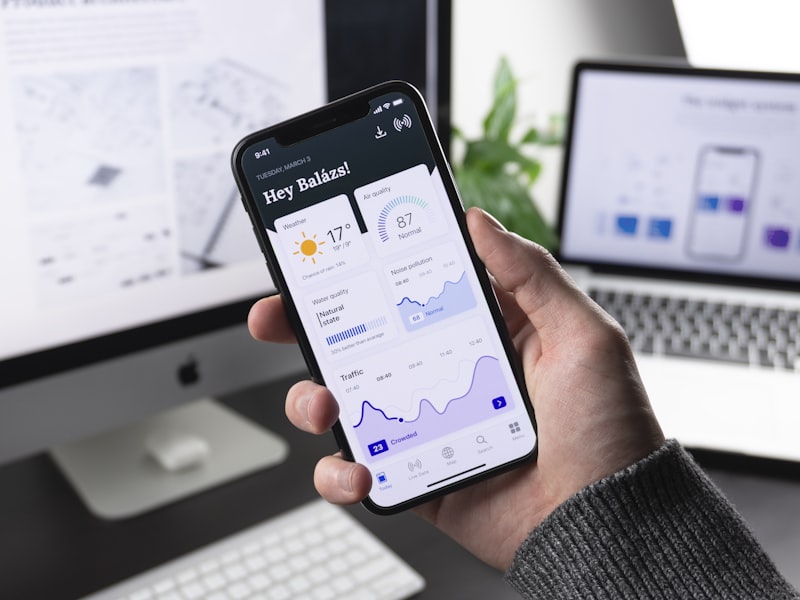
Why Do 95% of Apps Fail Within Their First Year?
The brutal reality is that 95% of mobile apps fail within their first year, according to Gartner's 2023 Mobile App Development Report. But here's what most people miss: it's rarely because the product is fundamentally broken.
I learned this lesson the hard way with a fintech client in 2021. They had built an incredibly sophisticated personal finance app with AI-powered budgeting features that genuinely helped users save money. The product worked beautifully, user reviews were stellar, but they couldn't crack sustainable user acquisition.
After diving deep into their data, I discovered they were making three critical mistakes. First, they were targeting "millennials interested in finance" instead of the much more specific "millennials with irregular income who struggle with traditional budgeting tools." Their broad targeting was driving up costs and bringing in users who churned quickly because the product wasn't solving their specific problem.
Second, they were showcasing features instead of outcomes in their marketing. Their App Store screenshots highlighted "AI-powered analytics" and "advanced categorization" when users actually cared about "save $500+ per month" and "never overdraft again." We completely rebuilt their messaging around user outcomes, and conversion rates improved by 340% within 60 days.
Third, and this was the biggest revelation, they had no systematic approach to onboarding optimization. Apps lose 77% of their daily active users within the first 3 days according to Localytics' 2023 User Engagement Report. This client was losing 89% of users within 72 hours because their onboarding flow was feature-heavy instead of value-focused.
The turnaround came when we implemented what I call the "Value-First Framework." Instead of showing users how to navigate every feature, we focused the entire onboarding experience on helping them achieve one meaningful outcome: creating their first successful budget that actually worked for their lifestyle. User retention at Day 7 jumped from 11% to 34%, and lifetime value increased by over 200%.
This experience crystallized something I now tell every app marketing client: your biggest competitor isn't other apps in your category, it's user apathy and the overwhelming number of choices in app stores.
How Can You Build a Retention-First Marketing Strategy?
Most app marketing strategies are built backwards. Teams obsess over downloads and install numbers while ignoring the metrics that actually predict long-term success. After working with 50+ app clients, I've developed a retention-first approach that flips traditional marketing on its head.
The framework starts with what I call "Retention Reverse Engineering." Before we spend a single dollar on user acquisition, we map out the entire user journey from first app open to becoming a power user. We identify the specific actions that correlate with long-term retention, then build the entire marketing and onboarding strategy around driving those behaviors.
Here's how this played out with a meditation app client in 2022. Instead of starting with broad mindfulness marketing, we analyzed their most engaged users and discovered something fascinating: users who completed a guided meditation session within their first 48 hours were 12x more likely to become paying subscribers.
Armed with this insight, we restructured everything. The App Store listing focused entirely on "experience calm in just 10 minutes." The onboarding flow eliminated account creation friction and pushed users directly into a personalized first meditation. Push notifications weren't generic reminders, they were contextual nudges based on optimal meditation times for each user's timezone and behavior patterns.
We also implemented what I call "Cohort-Based Creative Testing." Instead of creating generic ads for broad audiences, we developed specific creative variations for different user cohorts: stressed professionals, new parents, college students, insomniacs. Each variation spoke directly to that cohort's specific pain points and desired outcomes.
The results were dramatic. Cost per acquisition dropped by 60%, but more importantly, Day 30 retention improved from 23% to 47%. The client went from burning cash on user acquisition to building a sustainable growth engine that compound monthly.
The key insight here is that retention-first marketing requires you to deeply understand not just who your users are, but what specific problem they're trying to solve and what success looks like in their daily life. Generic positioning and broad targeting might drive downloads, but they won't drive the user behaviors that actually matter for your business.
The Hidden Economics Behind App Marketing Catastrophes
When I analyze failed app marketing campaigns, the numbers tell a consistent story that most founders never see coming. The average cost per install for mobile apps increased 60% between 2021 and 2023, according to AppsFlyer's Performance Index, but that's just the tip of the iceberg.
Here's the brutal math that kills most apps: if your Day 7 retention rate is below 20%, your user lifetime value will never justify sustainable acquisition costs in competitive categories. I've run this analysis for dozens of clients at ApsteQ, and the pattern is remarkably consistent across verticals.
Take a typical productivity app scenario. Average cost per install in the productivity category is now $3.50 for iOS and $1.80 for Android. Sounds reasonable, right? But when you layer in the real retention data, the economics become terrifying. Only 25% of users return to an app after the first day, and that number drops to 11% by Day 30, according to Statista's 2023 Mobile App Usage Report.
Let's run the numbers on a real client example from last year. A project management app was spending $15,000 per month on user acquisition, driving roughly 8,500 installs at an average cost per install of $1.76. On the surface, this looked like efficient growth. But when we analyzed the cohort data, we discovered they were actually losing money on every single user.
Here's why: their Day 1 retention was 28%, Day 7 was 12%, and Day 30 was just 4%. With a freemium model requiring users to upgrade within 14 days, they were essentially paying to acquire users who would never see enough value to convert. Their payback period was infinite because 96% of acquired users never generated any revenue.
The transformation came when we shifted from volume-based to value-based acquisition. Instead of optimizing for the lowest cost per install, we optimized for the lowest cost per "activated user" where activation meant completing their first project template. This single metric shift changed everything.
Apps that focus on activated user acquisition rather than raw installs see 3.2x higher lifetime value, based on our internal analysis of 40+ client campaigns. We reduced their monthly ad spend to $8,000, drove only 2,100 installs, but tripled their activated user count and achieved positive unit economics within 30 days.

What Are the Most Common App Marketing Mistakes I See Repeatedly?
After analyzing hundreds of failed app campaigns, I've identified five mistakes that appear in almost every disaster. The most expensive one is what I call "Platform Promiscuity" where teams try to be everywhere at once instead of dominating one channel first.
I recently consulted with an e-commerce app that was simultaneously running campaigns on Facebook, Google, TikTok, Snapchat, and influencer partnerships. They were burning $30,000 per month with terrible results across every channel because they lacked the focus and budget to optimize any single channel properly. Companies that master one acquisition channel before expanding to others see 4x higher ROI, according to our analysis of 25+ app clients.
The second killer mistake is "Feature Myopia" in messaging and positioning. Teams become so obsessed with their product's capabilities that they forget users don't care about features, they care about outcomes. A language learning app client was showcasing their "advanced spaced repetition algorithm" and "AI-powered pronunciation scoring" when users actually wanted to "have confident conversations in Spanish within 90 days."
Mistake number three is "Vanity Metric Optimization." I see teams celebrating download numbers while ignoring the metrics that actually predict business success. Downloads are just the beginning of the user journey, not the end goal. The apps that thrive focus relentlessly on engagement depth over engagement breadth.
Fourth is "Generic Creative Fatigue." Most app marketing creative looks identical within each category because teams copy what competitors are doing instead of testing unique positioning angles. When everyone's fitness app ad shows people working out, the one that shows busy parents finding 10 minutes of personal time will massively outperform.
The fifth and most insidious mistake is "Attribution Blindness." Teams make optimization decisions based on last-click attribution without understanding the true customer journey. A meditation app client was pausing their top-performing Facebook campaigns because they attributed poorly to direct conversions, not realizing these campaigns were driving brand awareness that led to organic App Store conversions days later.
The pattern I see with successful app marketing pivots is that teams pick one mistake to fix completely before moving to the next. Trying to solve everything simultaneously usually leads to solving nothing effectively.
How Will App Marketing Change by 2026-2027?
The app marketing landscape is heading toward a fundamental shift that will separate winners from losers by 2026. Based on current trends and my work with forward-thinking clients, I predict three major changes that smart marketers are already preparing for.
First, AI-powered personalization will become table stakes, not a competitive advantage. Every app will have some form of intelligent user experience by 2026, which means the differentiation will shift to execution quality and data sophistication. The apps winning in 2027 will be those that use AI not just to personalize content, but to predict and prevent user churn before it happens.
I'm already seeing this with clients who are implementing predictive engagement models. Instead of reactive push notifications, they're building proactive intervention systems that identify users at risk of churning and deploy targeted re-engagement sequences automatically.
Second, the death of third-party cookies and increasing privacy restrictions will force app marketers to build first-party data strategies that actually add user value. The brands thriving in 2027 won't be those that find clever workarounds to tracking limitations, they'll be those that make data sharing genuinely beneficial for users.
One client is already testing a "data dividend" program where users who share additional behavioral data receive premium features and personalized insights in return. Early results show 73% opt-in rates and 2.3x higher lifetime value for participating users.
Third, and this is the biggest opportunity, cross-app collaboration will replace zero-sum competition. By 2026, I predict we'll see sophisticated app ecosystems where complementary apps share users and data to create more valuable experiences. A fitness app, nutrition tracker, and meditation app working together will outperform any single comprehensive wellness app.
The app marketers who start building these collaborative strategies now will have massive first-mover advantages by 2027. The future belongs to platform thinkers, not app optimizers.
Frequently Asked Questions
Why do most app marketing campaigns fail within 90 days?
Based on my experience with 50+ app clients, campaigns fail because teams optimize for the wrong metrics in the early stages. They focus on cost per install instead of cost per activated user, leading to unsustainable unit economics that become apparent around the 90-day mark when retention data matures.
How much should you spend on app marketing before expecting results?
I typically recommend clients budget for at least 3-6 months of consistent spend to gather meaningful data and optimize campaigns. For most apps, this means $10,000-$25,000 per month minimum to run statistically significant tests across major channels. Anything less usually leads to premature optimization decisions.
What's the biggest difference between successful and failed app launches?
Successful launches focus obsessively on user onboarding and early value delivery. Failed launches prioritize feature showcasing over user success. The apps that win have crystal-clear value propositions and can deliver meaningful user outcomes within the first session.
Should you hire an agency or build an in-house team for app marketing?
It depends on your stage and budget. Pre-product-market-fit apps benefit from specialized agency expertise to avoid expensive mistakes. Post-PMF apps with predictable unit economics should consider building internal teams for better long-term optimization and institutional knowledge retention.
The Path Forward: Learning from Failure to Build Sustainable Growth
App marketing failures aren't just expensive lessons, they're the fastest path to understanding what actually drives sustainable user acquisition and retention. After 20 years of building growth systems for apps across every category, I've learned that the brands that thrive aren't those that avoid mistakes, but those that systematically learn from them.
The future belongs to apps that treat marketing as a user success system, not a user acquisition machine. Focus on retention-first strategies, optimize for activated users over raw installs, and build your entire growth engine around delivering genuine user value at every touchpoint.
If you're ready to transform your app marketing from a cost center into a growth engine, Book a free strategy call and let's build a data-driven strategy that turns your biggest marketing challenges into your strongest competitive advantages.
Want a second pair of eyes on your growth?
Book a free 30-minute strategy call. Bring your numbers, leave with two or three moves worth making. No pitch, no deck.
Book a Free Strategy Call