I Almost Killed a 7-Figure Brand by Confusing These Two Strategies
Back in 2018, I was working with a direct-to-consumer skincare brand that had just raised a Series A. The founder came to me with a simple request: "We need more customers, faster." I did what most marketers would do. I spun up Meta ads, optimized for conversions, hit our ROAS targets, and declared victory. For three months, the numbers looked beautiful. Then the retention data came in. Churn was catastrophic. CAC was climbing. The brand had paid to acquire customers who had zero intent to stick around. We had been running pure performance marketing when the business actually needed a growth marketing strategy. That mistake cost the brand six figures in wasted spend before we course-corrected. It also cost me a lot of sleep. Since then, understanding the real difference between performance marketing and growth marketing has become the foundation of everything I build at ApsteQ.
Key Takeaways Before You Read On:
- Performance marketing focuses on measurable, paid acquisition metrics; growth marketing focuses on the full customer lifecycle from awareness through retention and referral.
- Companies that align marketing strategy with the full funnel see 15-20% higher marketing ROI (McKinsey, 2023).
- Growth marketing teams that run structured experimentation programs grow revenue 2.5x faster than those relying solely on paid channels (Harvard Business Review, 2022).
- The smartest brands in 2025 are not choosing one over the other; they are integrating both into a unified system that balances short-term performance with long-term compounding growth.
What Is the Real Difference Between Performance Marketing and Growth Marketing?
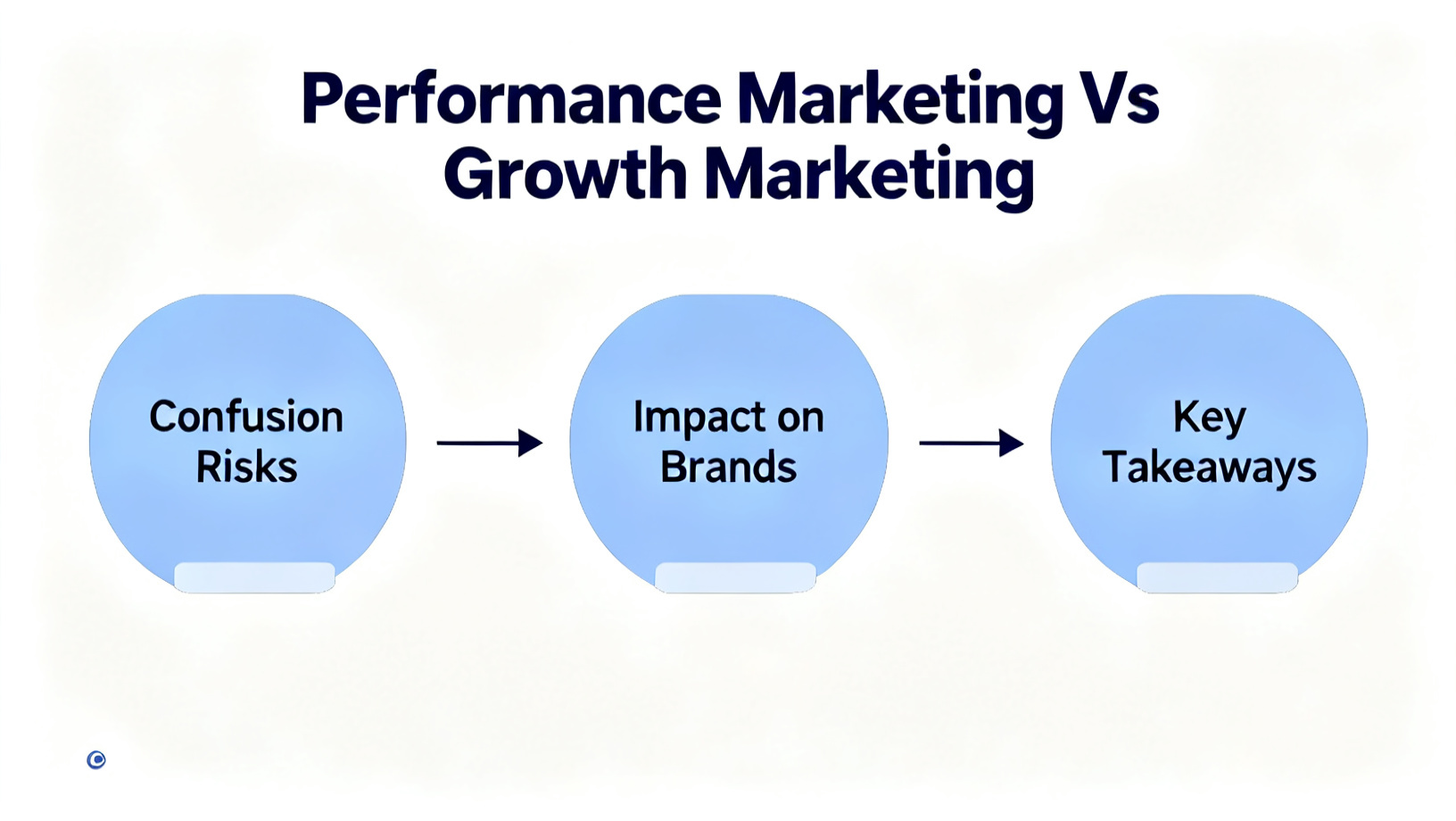
The honest answer: performance marketing is a subset of growth marketing, not its competitor. But in practice, most teams treat them as entirely separate disciplines, and that confusion creates massive strategic gaps. Performance marketing is defined by its accountability to specific, paid-channel metrics: cost per click, return on ad spend, cost per acquisition. Growth marketing, by contrast, is accountable to the entire customer journey, including activation, retention, referral, and revenue expansion. I have watched brands confuse the two on over 50 client engagements, and the cost is always significant.
One of my earliest clients, a SaaS company selling project management tools to mid-market teams, came to me after burning through $400,000 in Google Ads spend with nothing to show for it. They had a high-performing performance marketing operation. Click-through rates were solid. Cost per lead was within benchmark. But the product had a broken onboarding experience, and nobody was measuring anything past the form submission. Performance marketing had done its job. Growth marketing had never been deployed.
The data backs up how common this problem is. Only 23% of companies report having a fully integrated marketing strategy that connects paid acquisition to post-acquisition lifecycle metrics (McKinsey, 2023). That means the overwhelming majority of brands are essentially flying blind after they acquire a customer. They know their CPL. They do not know their 90-day LTV, and that gap is where most marketing budgets go to die.
Growth marketing, as I define it and practice it at ApsteQ, is built around a core principle: every touchpoint in the customer journey is a variable that can be tested, optimized, and compounded. This includes the ads, yes. But it also includes the onboarding email sequence, the in-app notification cadence, the referral mechanic, the pricing page copy, and the win-back campaign for churned users. Performance marketing is the engine. Growth marketing is the vehicle it powers.
There is also a time horizon difference that most marketers underestimate. Performance marketing is optimized for immediate, attributable return. Growth marketing is optimized for compounding return over months and years. Brands that invest in growth marketing infrastructure see customer lifetime value increase by an average of 33% within 18 months (Harvard Business Review, 2022). That compounding effect is what separates businesses that scale sustainably from those that are perpetually trapped on the paid acquisition treadmill.
How Do You Build a Framework That Uses Both Performance and Growth Marketing Effectively?
The most effective approach I have developed across 300+ brand engagements is what I call the Acquisition-to-Compounding framework. It is not enough to just "do both." You need a structured system that assigns the right strategy to the right stage of the customer lifecycle, with clear feedback loops connecting performance data back to growth experiments.
Here is how I build it with clients:
- Map Your Full Funnel First: Before spending a dollar on performance marketing, document every touchpoint from first impression to year-two retention. Most teams skip this step and optimize channels in isolation.
- Define Performance Marketing's Role Precisely: Performance marketing should own top-of-funnel paid acquisition and retargeting. Set strict guardrails: maximum CPL, minimum quality score thresholds, and mandatory handoff criteria before a lead enters your growth marketing system.
- Build Your Growth Loops Before You Scale Spend: This is the step most brands rush past. Your referral mechanic, onboarding sequence, and activation milestones need to be tested and proven before you pour paid traffic into the system. Otherwise, you are filling a leaky bucket.
- Create Cross-Channel Feedback Loops: Your performance marketing data should inform your growth experiments. If paid traffic from a particular audience segment shows high CTR but low 30-day retention, that is a signal to adjust your growth marketing activation flow for that segment, not just the ad creative.
- Establish a Unified Measurement Layer: Use a single dashboard that tracks both performance metrics (ROAS, CPL, CTR) and growth metrics (activation rate, 30/60/90-day retention, NPS, referral rate). Without this, you are optimizing two disconnected systems.
I deployed this framework with a fintech client in Q3 2024. They were running aggressive Google and Meta performance campaigns with solid ROAS numbers, around 3.2x, but their month-three churn rate was 44%. We paused paid scale for six weeks, rebuilt their onboarding sequence with a structured A/B testing program, and implemented a referral loop triggered at the first successful transaction milestone. When we relaunched performance campaigns, churn dropped to 19% within 60 days. The same ad spend was producing dramatically better business outcomes because the growth marketing infrastructure was finally in place to capture and retain what the performance campaigns were delivering.
"Scaling paid spend before you have a functioning growth loop is the single most common and expensive mistake I see in modern marketing. You are not building a business. You are building a dependency."
The Data Makes It Clear: Growth Marketing Outperforms Pure Performance Marketing at Scale
When you look at the numbers across a portfolio of brands, the performance-only approach almost always breaks down as companies scale. The math of paid acquisition becomes increasingly hostile as you exhaust warm audiences, CPMs rise with competition, and attribution models get less reliable in a post-cookie environment. Growth marketing, by contrast, builds compounding assets that reduce dependency on paid spend over time.
Consider these numbers that I track across client portfolios and validated by major research institutions:
- Growth marketing driven by experimentation programs generates 11% higher revenue growth year-over-year compared to companies relying primarily on performance channels (McKinsey, 2023).
- Companies with mature retention and lifecycle marketing programs spend 5-7x less to grow revenue than those relying solely on new customer acquisition (Harvard Business Review, 2022).
- Email and organic search, two core growth marketing channels, deliver the highest ROI of any marketing channel with email averaging $36 return for every $1 spent (Statista, 2023).
- Brands running structured growth experimentation programs launch 50% more experiments per quarter and achieve statistically significant improvements 3x faster than ad-hoc testing (MIT Sloan, 2021).
At ApsteQ, I built our entire service model around this data reality. We help brands transition from performance-dependent growth to systems-driven compounding growth, using AI-powered tools to accelerate the experimentation cycle and identify the highest-leverage optimization opportunities across the full funnel.
| Metric | Performance Marketing Focus | Growth Marketing Focus | Integrated Approach |
|---|---|---|---|
| Average CAC Trend (12 months) | Increases 15-30% annually | Decreases 10-20% annually | Stable or declining |
| Customer LTV (18 months) | Baseline | +33% vs. baseline | +40-50% vs. baseline |
| Revenue Growth Rate (YoY) | Tied directly to ad budget | Partially decoupled from ad spend | Highest; compounding effect |
| Channel Dependency Risk | High; single-channel concentration | Low; diversified organic loops | Lowest; balanced portfolio |
| Marketing ROI (McKinsey, 2023) | Standard baseline | +15-20% vs. baseline | +25-35% vs. baseline |
What Are the Most Costly Mistakes Brands Make When Choosing Between These Strategies?
I have seen the same mistakes repeat across industries, company stages, and budget sizes. The good news is they are all avoidable once you know what to look for. The bad news is most brands do not recognize them until significant damage has been done.
Mistake 1: Treating performance marketing as the growth strategy. I consulted with an e-commerce brand in the wellness space that was proud of their 4.1x ROAS on Meta. When I asked about their email list health, repeat purchase rate, and referral program performance, they had no data. Their "growth" was entirely dependent on a single paid channel. When iOS 14 privacy changes hit, their attributed ROAS dropped to 1.8x overnight, and they had no fallback. They had been building on rented land.
Mistake 2: Running growth marketing experiments without sufficient traffic volume. Growth marketing requires statistical significance to produce reliable insights. I see early-stage founders run A/B tests on 200 monthly visitors and make permanent product decisions based on the results. Gartner research indicates that 67% of A/B tests run by marketing teams are statistically inconclusive due to insufficient sample sizes (Gartner, 2022). If you do not have the volume, focus on qualitative growth research and save experimentation programs for when you have the traffic to support them.
Mistake 3: Siloing performance and growth teams. In larger organizations, I regularly encounter brands where the performance marketing team and the growth marketing team operate in complete isolation, with different tools, different dashboards, and different leadership reporting lines. This creates a situation where performance campaigns are optimized for metrics that actively conflict with growth objectives. I worked with one enterprise SaaS company where the performance team was incentivized on MQL volume while the growth team was measured on product activation rates. The performance team was generating high volumes of unqualified leads to hit their numbers, and the growth team was spending resources trying to activate users who were never a good fit to begin with.
Mistake 4: Under-investing in the growth marketing infrastructure before scaling performance spend. This is the leaky bucket problem I mentioned earlier. According to McKinsey, companies that fix their retention and activation metrics before scaling acquisition see 2-3x better outcomes from the same paid spend (McKinsey, 2023). Sequence matters. Build the foundation first.
What Does the Future of Performance and Growth Marketing Look Like in 2026-2027?
The convergence of AI, privacy regulation, and first-party data is fundamentally reshaping both disciplines, and the brands that adapt early will have significant competitive advantages heading into the back half of this decade.
My first prediction: AI will collapse the gap between performance and growth marketing execution. In 2026, AI-powered systems will be capable of dynamically adjusting ad creative, landing page copy, onboarding flows, and retention triggers in real time based on individual user behavior signals. The distinction between "paid acquisition" and "lifecycle marketing" will become increasingly blurry as unified AI systems optimize across the entire customer journey simultaneously. At ApsteQ, we are already building early versions of these integrated systems for our clients.
My second prediction: first-party data will become the primary competitive moat. As third-party cookies continue their deprecation and signal loss from privacy platforms intensifies, performance marketing will become dramatically less efficient for brands without rich first-party data assets. Gartner predicts that by 2026, 80% of marketers will abandon personalization efforts due to data complexity unless they invest in first-party data infrastructure now (Gartner, 2022). Growth marketing, which naturally builds first-party data through owned channels and direct customer relationships, will become the primary vehicle for performance marketing's continued effectiveness.
My third prediction: community-led growth will emerge as the dominant growth loop for B2B and prosumer brands. The brands that invest in community infrastructure in 2025 will have self-sustaining acquisition and retention engines by 2027 that compound without proportional increases in paid spend. This is the ultimate expression of growth marketing's potential: a system that gets cheaper to operate as it scales.
Frequently Asked Questions
Is performance marketing the same as paid advertising?
Not exactly, though they overlap significantly. Performance marketing is defined by accountability to measurable outcomes like conversions, CPL, and ROAS, and it primarily uses paid channels to achieve them. Paid advertising can also include brand awareness campaigns with no direct response objective. In my experience, most teams use the terms interchangeably, but the distinction matters when setting strategy and KPIs.
Can small businesses benefit from growth marketing, or is it only for large companies?
Growth marketing is actually more valuable for small businesses because it forces efficiency. When you cannot afford to throw money at paid acquisition, you have to build organic loops, optimize retention, and engineer referrals. I have seen bootstrapped brands with under $50,000 in annual marketing spend outgrow venture-backed competitors because they invested in growth fundamentals instead of paid scale.
How long does it take to see results from a growth marketing strategy?
Honest answer: longer than performance marketing, but the results compound. Most brands see meaningful data from growth experiments within 60-90 days, but the real compounding benefits of retention improvements, referral loops, and organic channel development typically materialize over six to eighteen months. I always set this expectation with clients upfront because impatience is the number one killer of growth programs.
What metrics should I use to measure growth marketing success?
I track six core metrics across every growth marketing engagement: activation rate (percentage of new users reaching their first value milestone), 30/60/90-day retention, NPS, referral rate, LTV to CAC ratio, and organic acquisition percentage. These metrics tell you whether your growth system is healthy far better than any paid channel metric alone. Performance metrics matter, but they only tell part of the story.
How does AI change the performance marketing vs growth marketing equation?
AI is the great unifier. Tools that automate creative testing, audience segmentation, personalized onboarding, and predictive churn intervention are making it possible for smaller teams to run sophisticated integrated strategies that previously required large headcounts. At ApsteQ, I build AI-powered growth systems that connect performance data to lifecycle optimization automatically, which is where the real leverage lives in 2025 and beyond.
The Bottom Line on Performance Marketing vs Growth Marketing
After 20 years and over 300 brand engagements, my position is clear: the performance marketing versus growth marketing debate is a false choice. The real question is whether you have built a system where they work together. Performance marketing drives efficient acquisition. Growth marketing ensures that acquisition compounds into lasting business value. Neither works optimally without the other.
The brands winning right now are the ones that have stopped asking "which strategy should we use?" and started asking "how do we build an integrated system where performance and growth amplify each other?" That requires the right framework, the right measurement infrastructure, and in most cases, a strategic partner who has built these systems before.
If you are ready to stop choosing between short-term performance and long-term growth and start building a system that delivers both, I would love to map out what that looks like for your specific business. Book a free strategy call and let us figure out where the real leverage is in your growth stack.
Want a second pair of eyes on your growth?
Book a free 30-minute strategy call. Bring your numbers, leave with two or three moves worth making. No pitch, no deck.
Book a Free Strategy Call